
Skip to content
Foxx product range

Easy Ways to Bring in cGMP into Your Laboratories

Recently, the Government of India (GOI) has mandated GMP regulations for all pharma industries, including MSME. GMP compliance is the best way to conduct business across borders. The basis of this is putting quality first, at all times and in all processes. 

Here are Guidelines toward making your laboratory cGMP compliant:

  • Establish a quality management system (QMS). This is a set of policies and procedures that ensure the quality of your products and services. The QMS should cover all aspects of your laboratory operations, from the procurement of raw materials to the testing and release of finished products. 
  • Validation is documented testing, performed under highly controlled conditions, and demonstrates a process that consistently produces a result that meets predetermined acceptance criteria. In a validated process, it is possible to retest the system and obtain conformance to specification. 
  • Have written Standard Operating procedures for all laboratory activities. These procedures should be clear, concise, and easy to follow. They should also be regularly reviewed and updated as needed. 
  • Qualified and trained staff. All staff who work in the laboratory should be qualified and trained periodically to do their jobs. They should also be aware of the cGMP regulations and how they apply to their activities at work. 
  • Maintain proper documentation. This includes records of all laboratory activities, such as test results, calibration records, and training records. Documentation should be accurate, complete, and legible. 
  • Conduct regular audits. This is a way of checking that your laboratory is complying with the cGMP regulations. Audits should be conducted internally and by an independent party. 
  • Take corrective and preventive action (CAPA). This is a way of addressing any problems that are identified during an audit or other review. CAPA should be timely and effective.


By following these steps, you can make your laboratory cGMP compliant and ensure the quality of your products.


Here are some additional tips for making a laboratory cGMP compliant:

  • Keep the laboratory clean and organized.

Most laboratories have been reported to spill or throw some of the laboratory consumables, due to contamination, inadvertent mixture or improper storage/handling. These can be prevented by using space saving, closed systems which prevent spillage and inadvertent mixtures/contamination.


Space saving carboy assemblies


  • Use appropriate equipment with respect to size and material for each of the process.

Many a times laboratories use set volume procedures for their processes rather than scaling up, resulting in wastage and loss of time do to cleaning and validating such equipment. Instead choose the systems that are appropriate for the specific processes and procedures and when possible switch out vessels for Single-Use.
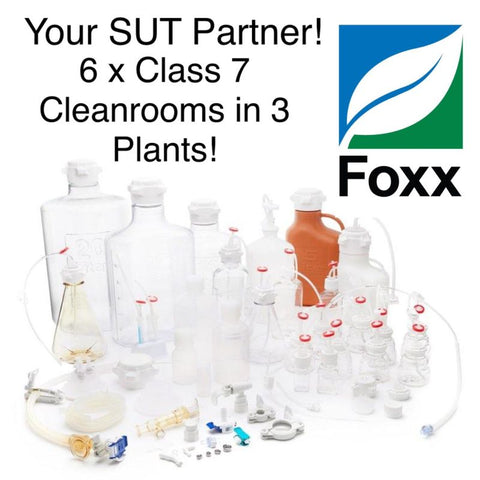
 

Single use assemblies from Foxx Life Sciences


  • Label and date all chemicals and reagents clearly.

A simple practice of labelling has shown to prevent many laboratory mishaps and loss of consumables.


Clear labelling surface on top of the bottle cap


  • Dispose of waste properly.

Sustainability and safety should be on the top of list of general laboratory practices. This is especially in laboratories dealing with Hazardous chemicals and agents. Ensure to dispose off all wastes appropriately and final disposable through certified hazardous waste management units.


Vactrap - anti spillage solutions from Foxx Life Sciences


  • Ensure all practices are documented and certified at appropriate intervals.


By following these tips, you can help to ensure that your laboratory is a safe and productive environment for producing high-quality products. When a laboratory process includes all of the above steps, the quality at each level will keep improving.


  • Scientifically sound and appropriate specs.
  • Establish written specs, sampling, procedures.
  • Conformity to written specifications.
  • Calibration of instruments.
  • Conformance to appropriate standards of identity, strength, quality, & purity.
  • Performance results documented prior to release.
Previous article Foxx Life Sciences – A Bridge Between India and the United States
Next article Management Spotlight: Eknath Kulkarni, The Man Who Believes in Reigning the Chaos with Skilful Innovation

Frequently Asked Questions

Foxx filtration products, including membrane filters and vacuum filtration assemblies, are used to remove particulates, sterilize media, and prepare solutions for cell culture or analytical processes, offering high-performance separation suitable for diverse laboratory needs.
VersaCap® is a patented leak-proof cap technology used on carboys and bottles that supports interchangeable connectors, secure venting, and reliable attachment of tubing and filters. It enhances fluid management flexibility for bioprocess and lab applications without compromising sterility or workflow integrity.
Foxx carboys are designed with wide necks, clear graduations, and space-saving shapes that make filling, handling, and storage easier while providing accurate volume measures and secure closures important for busy labs managing media, reagents, or waste solutions.
Delivery timelines for products ordered on foxxlifesciences.in vary based on location and availability, but the company aims for fast processing and regional distribution through its Hyderabad facility to support timely supply to labs and manufacturers in India and the APAC region.
Industries including biotechnology, pharmaceutical manufacturing, clinical research, vaccine production, and laboratory research rely on Foxx single-use systems for sterile fluid transfer, media storage, waste containment, filtration, and advanced bioprocess workflows due to their regulatory compliance and ease of use.
Yes. Using single-use bottle assemblies and carboys with integrated tubing, vent filters, and leak-proof cap systems helps establish closed fluid paths that lower contamination risk compared to reusable glass or open systems, improving overall process integrity in research and biomanufacturing.
When selecting tubing and connectors, consider chemical compatibility, sterility requirements, flow rate needs, and connection type (such as hose barb or aseptic connectors). Foxx provides options in silicone, thermoplastic (TPE), and multiple connector standards to meet fluid handling performance in bioprocess applications.
Foxx offers custom single-use assemblies (MTO) where customers can choose specific bottle sizes, tubing brands, connectors, and configurations designed to match project requirements. These tailored systems are ideal for specialized bioprocessing, fluid management, or unique lab workflows that need bespoke solutions.
Sterile assemblies are gamma irradiated and sealed to minimize contamination risks, making them ready for use in sensitive bioprocess and cell culture workflows. Non-sterile assemblies still offer the same high-quality materials and design but require in-house sterilization or cleaning prior to use depending on your lab protocol.
Foxx Life Sciences offers single-use bottle assemblies in various capacities, from small media bottles to larger assemblies tailored for culture, formulation, or waste applications. These are constructed with USP Class VI resins and may include tubing, filtration, and VersaCap® systems to support aseptic fluid transfer in lab workflows.
Foxx carboys, including EZBio® and EZGrip® models, are designed with ergonomic handles, secure VersaCap® leak-proof technology, and USP Class VI materials to provide safe, efficient fluid storage and transfer. Their shape, graduations, and connector options make them versatile for liquid handling, media storage, waste collection, and integration with single-use systems.
Yes. Foxx Life Sciences products are developed using USP Class VI materials and FDA-grade components, produced in ISO Class 7 certified environments, and supported by QA documentation. This compliance ensures that the products meet rigorous performance, sterility, and quality requirements for life science, biopharma, and laboratory applications.
Choosing Foxx Life Sciences gives you access to high-quality single-use bioprocess products manufactured under ISO 13485 quality standards, assembled in cleanroom environments, and backed by global experience in fluid management and lab consumables. Their solutions help labs and manufacturers achieve reliable performance, regulatory compliance, and optimized process workflows from research through full-scale production.
Single-Use Technology (SUT) refers to disposable fluid handling and consumable systems that eliminate the need for cleaning and sterilization validation, improve contamination control, reduce turnaround time, and lower operational costs. SUT is widely adopted in biopharmaceutical manufacturing, vaccine development, and laboratory research because it allows faster setup, minimal cross-contamination risk, and scalable process efficiency.
Foxx Life Sciences provides a comprehensive range of laboratory and bioprocess consumables including single-use systems (SUS), bottle and carboy assemblies, filtration products, tubing and connectors, collars and gaskets, stainless steel options, and custom assemblies designed to meet the needs of research labs, biotech manufacturers, and pharmaceutical production facilities. These products are engineered to support fluid handling, sterile storage, and efficient workflows across upstream and downstream bioprocessing operations.